3/25/09

TRAILER: "Where the Wild Things Are"

Okay, maybe this has become overkill or maybe I'm hyping up this movie more than I should. But I wasn't expecting the trailer to appear online so quickly after those images from USA Today came up. I thought Warner Bros. would hold onto the thing until the last minute, that is, 'til Friday when it was supposed to be seen for the first time with "Monsters vs. Aliens." I'm sure glad they decided not to adhere so strictly to that strategy since I'm not so keen on seeing the Dreamworks flick -- none of the gags or jokes strike me as funny really, and while the plot screams amusing, their marketing doesn't scream quality. (Having grown up loving the Universal Monsters -- Wolfman, Frankenstein, Dracula, etc. -- the selection on call for this movie just seemed... random. The monster movie is an old staple genre of Hollywood so it's just irking that they went with a cockroach scientist. At least there's the "Missing Link" lagoon monster, though. Not that Dreamworks would've ever fulfilled my wild, I'll admit it, dreams of seeing these classics done up in respectful CGI up against some actually worthy-looking alien creatures -- too limited an audience, and hard to sell -- but for them to have gotten so close and still strayed so far is just too much. Too much!)

But I digress.
The trailer for "Where the Wild Things Are" is finally out, and it is even more fantastical than I imagined it could've been... as unlikely as that may sound considering how many posts I've made about it, not to mention my hopelessly exuberant rhetoric in regards to the film and talent involved. The rendition of Arcade Fire's "Wake Up" starts off much different from their album version (cleaner, fleshed out), but it's just as colorful, and by the end of the trailer returns to the sounds of the original album version and really truly aids in making these characters endearing and magnetic. Purely rambunctiously lovable. Like the most fun you've ever had, the wildest fantasies. It's like Dorothy stepping out of her black and white home into the magical Technicolored Oz. (I used that line in a review I wrote about the Arcade Fire's debut album, in fact.)


Wildly excited yet?


SCOOPED first by: Slashfilm

3/22/09

"Wild Thing," You Make My Heart Sing

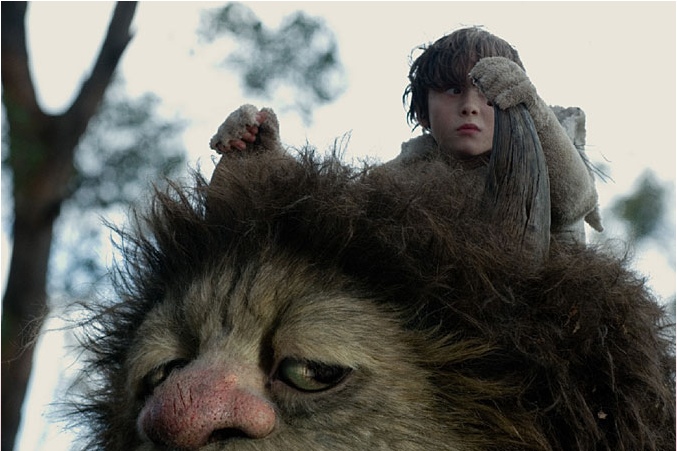
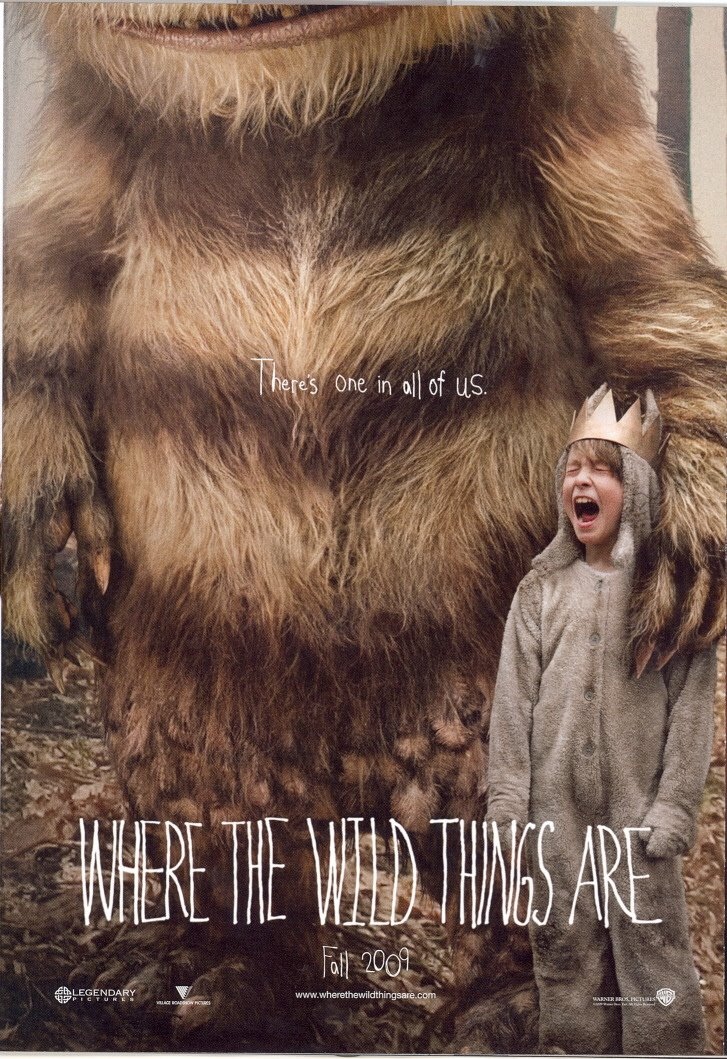
After spending innumerable hours staring at the poster for Spike Jonze's "Where the Wild Things Are" -- which has very easily claimed its place once again at the top of my most anticipated list for this or any year, as I mentioned before -- and holding it up for evaluation next to some images from the book, I have to say I'm relieved and elated that Jonze and Co. have maintained stylistic fidelity -- notice those scales (or feathers?) on Carol's (James Gandolfini) legs, and the striping of the fur -- as well as the original scale of the Wild Things in relation to little Max (Max Records, a definite contender for coolest name ever). Anyone ever notice that, although the Wild Things are giants next to their young king, they would really be as tall as (or a little taller than), say, Max's mother (Catherine Keener) if they entered our reality. This was probably intended by Maurice Sendak, and it's a minute visual element that's actually very thoughtful. The physical manifestation of subconscious feelings, or the distortion of authority figures into villains. Like the casting of Jason Isaacs in "Peter Pan" (2003) as both Mr. Darling and Captain James Hook, which was an excellent touch to that adaptation, as bland as that movie was as a whole. And with these new photos, it's with enormous glee that I can say that Jonze has really outdid himself in making these creatures expressive, larger-than-life and utterly huggable. I'm eager to see the translations of Douglas the chicken-thing (Chris Cooper) and Alexander the goat-thing (Paul Dano).

Jonze: "As a kid, I just connected to it. I wanted to hear it over and over. It's like trying to explain why you love somebody. To me, the Wild Things are both cuddly and dangerous. I wanted to climb atop of them like Max."

Catherine Keener on Jonze: "Spike has such an incredible imagination, and this is very much a work of imagination. And there is so much room to apply your own."

Jonze on Sendak and the process of adapting the book: "He was adamant that I make my own thing. He had strong opinions, but he would ultimately defer to us. He said, 'Make something personal to you.' "

Jonze on the tone of the film: "I never thought of it as a children's movie. My intention was to be true to how it felt to be 9 years old. Maurice's whole thing is to be honest. You can say anything to kids as long as you are respectful and not pandering"

There are a couple more incredible photos from the film at USA Today for a total of twelve, and they come packaged with some more great quotes from Jonze, the producers, even young Max himself. I'm so brimming with excitement over the trailer -- which features only one line of dialogue and the musical stylings of the Arcade Fire (track: "Wake Up") -- that I don't even care anymore that "Monsters vs. Aliens" has gotten some deadening reviews and might not be worth admission.

Do these images make your heart flutter?


IMAGES from: Slashfilm and Cinematical

3/19/09

My "Chéri" Amour

First of all, condolences to the Redgraves, the Richardsons and the Neesons for their loss of Natasha Richardson (1963-2009; "The Parent Trap," the revival of "Cabaret," Merchant/Ivory's "The White Countess"), who died yesterday of brain damage after a skiing accident. R.I.P., lady.
------
The trailer for Stephen Frears' prestige film, "Chéri," from the Colette novella which stars Michelle Pfeiffer in the title role (which many are pegging as her return to the game for that coveted Oscar she's still not won yet; I say take a number, neither has Sigourney Weaver) has debuted online. But, as many have already noted, the film takes on a lighter, frothier, shriller tone than its source material. "The book has a comic edge to be sure. This much of one? It didn't read that way to me but Colette's prose is a flexible beauty," is what Nathaniel R. of Film Experience says. And Guy Lodge from In Contention: "I’m still a little uncertain of the brittle, faintly campy comic tone present here — Colette’s novella (which I’ll get into when our Page to Screen series begins) is a rather more delicate, melancholy animal. But it looks like a classy outing all round. We’ll see." Both reckon this appeals more in the vein of "Mrs. Henderson Presents" than "Dangerous Liaisons." Lodge recalls that this is, indeed, a Miramax film, and they're never ones to restrain themselves from painting their subtler material with a broader marketer's brush - citing "Happy-Go-Lucky" as an example of that. Maybe this is because of the heavy backlash that similarly glossy British upper-crust period drama "Atonement" experienced, with Miramax deciding they don't want to be seen as beating a dead horse.


From Amazon, via Awards Daily:
Chéri is a classic story of a love affair between a very young man and a charming older woman. The amour between Fred Peloux, the beautiful gigolo known as Chéri, and the courtesan Léa de Lonval tenderly depicts the devotion that stems from desire, and is an honest account of the most human preoccupations of youth and middle age. With compassionate insight Colette paints a full-length double portrait using an impressionistic style all her own.
The film is fronted by Pfeiffer supplemented by the indomitable Kathy Bates ("Revolutionary Road," "Titanic" - she's got period down pat) and Rupert Friend, and is to be released in theaters on June 19th. Expect to see it make the awards rounds early next year in the costume departments, but perhaps maybe the acting ones as well, maybe picture, maybe director?

Cheri: "Isn't She Lovely?" or could she be looking better? (Supposed to be a Stevie Wonder reference. Kinda stretching it a little.)


TRAILER from: Awards Daily

3/18/09

"Evening Sun" Over Texas Skies

"A ruthless grudge match between two old foes. Lines are drawn, threats are made, and the simmering tension under the Tennessee sun erupts, inevitably, into savagery." I have not yet discovered where this premise - or is it an excerpt from a book or poem? - for "That Evening Sun" comes from or if it was chalked up by the filmmakers for the sake of SXSW programs, but it's spreading like wildfire all across the internet, wherever this trailer shows up, although it is a mighty fine way of summing up the film. At least by the looks of this exceptionally unsettling trailer, it is. The film, directed by Scott Teems, brings to mind Sidney Lumet's "Before the Devil Knows You're Dead," which is also about exceedingly normal people on the descent after a confrontation turns volatile, and after bad actions become irrevocable. It just won the Special Jury Award for Ensemble Cast (but lost out to "Made in China" for Overall Narrative Feature) as well as the Audience Award for Best Narrative Feature at SXSW in Austin, Texas, which wraps on the 22nd. I can't wait to see this.


The film stars Hal Holbrook from "Into the Wild" doing his best Walt Kowalski impersonation (from Clint Eastwood's "Gran Torino") though this film looks a little more consistent in its gritty, bucolic tone, and Holbrook himself looks less self-aware, as if this were a new sort of character for him. And now he's front and center. Mia Wasikowska, Ray McKinnon, Carrie Preston and Walter Goggins also star.

Other winners of the fest in Austin were "45365" for Documentary Feature, directed by Bill Ross, which explores everyday life in Middle America - but specifically Sidney, Ohio, which provides its zip code as the title - and the people who keep it going. (Diane Sawyer's special about Appalachia that aired a few weeks ago on ABC could append this exploration, although this is Kentucky and the film's in Ohio.) Honorable mention for the category went to "The Way We Get By" by Aron Gaudet. As for the Emerging Visions Award, that went to "Motherland" by Jennifer Steinman, about six grieving mothers and their journey to Africa in an effort to test the theory that "giving is healing." "MINE" by Geralyn Pezanoski won the Audience Documentary Feature, which uses the backdrop of Hurricane Katrina's aftermath of lost and abandoned pets to explore issues of race, class and animal welfare in America. And as I mentioned already, "Made in China" won Best Narrative Feature. Directed by Judi Krant, it is about an inventor who gets lost in Shanghai and ultimately discovers that "it takes more than a bright idea to succeed." More details about these films are at Variety. More awards and winners at Filmmaker Magazine.

Will you be peering into the "Evening Sun"?


TRAILER from: Trailer Addict
SCOOPED first by: Variety

3/17/09

We Know "Where the Wild Things Are" Now

After what felt like a decade but was actually more like three years, it seems that we're finally going to be getting Spike Jonze's translation of the Maurice Sendak seminal children's book, "Where the Wild Things Are," and I could not be happier. (To be fair, it was known late last year that the film was slated for release in the fall of this one, but you can't blame me for not exactly investing in that pronouncement since the production has been embedded in secrecy and rumor for some time, and this conlusive release date is still a year later than was originally intended.) And to further tie down expectations of its release, Jonze and Co. have released a poster (below) sparse in its focal points but brimming with detail, and pithy in connoting the thematic and emotional range of the film. I think it's clever that the Wild Thing's face has been cut off: maintains mystery (and doesn't obligate the filmmakers to one appearance), but also helps to draw you to Max (Max Records) standing at his side, with the Wild Thing no doubt a transliteration of sorts of the boy's pre-adolescent mania. It also solidifies that practical effects, suits and puppetry will still be central to the visual aspects of the film, to assume a similar charm to that of Jim Henson's creations (but with an earthier, more adult flair).

(click to enlarge, via Slashfilm)

This is one such project that has kept my mouth watering, mind racing, ever since the concept of a marriage between Jonze and his knack for quirkiness and whimsy and Sendak's vividly, beautifully, earnest book about maturation, restraint and interpersonal responsibility slipped its way into my vision; and has topped two separate most anticipated lists of mine since production began. (I don't have those lists published online, but will now make it a feature in the future.)(I referenced this film in my last post as the project I'm most looking forward to that's penned by author Dave Eggers.) It's a match made in Heaven. Because although I adore "Eternal Sunshine of the Spotless Mind," which was directed by Michel Gondry, I'm a sucker for Jonze's collaborations with Charlie Kaufman, partly because those scripts are just downright wondrous in their intricacies, but largely because of Jonze's magnificent way of constructing them. "Being John Malkovich" is a masterwork of absurd relationships and people, and as a meditation on being and consciousness, but is unforgettable in its sincerity, its conclusiveness about love as an end-all, be-all. And "Adaptation" is such a tender film with dozens of quotable lines that resonate largely because the humanity that Jonze is able to extract through some peculiar devices like pacing and scale are virtually unnoticeable at first, but indelible upon review.

It's like those experience you have as a child where someone has said something to you, or you have witnessed something that would otherwise be the minutiae of the day, but they become motifs in life, recurring with a little more depth and profundity each time. That's the beauty of childhood, and I hope Jonze has been able to instill that kind of approach in this film.

The trailer for the film will debut in front of "Monsters vs. Aliens" on March 27th.

Will you be going "Where the Wild Things Are?"


IMAGE from: Entertainment Weekly
SCOOPED first by: In Contention

Sam Mendes Gives it Another "Go"

Only a few months after Sam Mendes' powerfully and cripplingly dramatic "Revolutionary Road" (which was robbed of some much-deserved nominations, not wins, at this last outing at the Oscars, most definitely for Leonardo Dicaprio but also for the underrated Kathy Bates) and he's already geared up for another go with yet another American couple to explore in "Away We Go." Lucky for them he's had his fill of destroying dreams, and now is intent on preserving the glue that holds a couple together (played by John Krasinski of "The Office" and Maya Rudolph who was a favorite of mine from "SNL" and appeared in Robert Altman's swan song "A Prairie Home Companion") after they find out their newborn baby might not have a home. It's totally new territory for Mendes - who's done suburban parody, disconcerting war pictures, and cold gangster films - and as far away tonally from "Revolutionary Road" as can be conceived, so it's an experiment I'm quite excited about, especially with all the talent involved.


The film has the stylings of "Little Miss Sunshine" which yields some amount of promise, but at the same time makes me groan at the prospect of sitting through another film in which people act insensitively to one another for our own amusement. (As much as I adore Catherine O'Hara, her line and delivery about moving "3000 miles away" are completely unfunny to me.) But unlike "Little Miss Sunshine," the film looks like it'll take a more tender approach to their oddities and misgivings, all in a post-"Juno"/"Rachel Getting Married" kind of way, relishing in the unpredictable joys that arise from difficult circumstances rather than pitting those circumstantial incidences and, albeit unlikely, aspirations against an overtly cruel, bitter and cynical world as was depicted all throughout "Sunshine." (With the exception of the pageant director at the end, every minor character in the entire film is either a bastard or a fool.) I think the film takes more notes from the worldview of author Dave Eggers (who plays screenwriter here, this now being the second film penned by him that I am interested in) than director-duo Jonathan Dayton and Valerie Faris, who often uses the harshness that can tinge an expression misinterpreted or taken out of context to contrast with their eventual softness. His characters are frequently hardened souls (or souls looking to get hard - sorry, vulgar, but true) who don't quite experience enlightenment in some climactic moment, but rather discover that their severe callousness is choking the people around them, or themselves. (His novel You Shall Know Our Velocity! explores precisely that in the guise of a road narrative.)

I've had a particular interest in Sam Mendes ever since he did "Road to Perdition" and after I'd discovered that he was a comrade of Rob Marshall's ("Chicago," "Memoirs of a Geisha," the upcoming "Nine") in their work in theatre and on Broadway. His films maintain that stage sensibility, very often framed in such a way that they could retain utter fidelity if transported instantly to the Steppenwolf house, for instance. ("Revolutionary Road" could be the next "August: Osage County" if it only had some great talent willing to do it.) His use of light, music, camera distance, even color reeks theater and its a wonderful thing to keep in mind while watching his films. The heartbreaking scene in "Road to Perdition" where Tom Hanks meets Paul Newman for the last time in the rain surrounded by buildings dotted with windows and silhouettes peering out is made all the more moving when you consider that if it were on the stage, it would've been conceived of as a choreographed dance almost, with bullets as their confetti or glitter, rather than as two disparate performances occurring at once in a large sound stage. There seems to be a lot of open-air environments in "Away We Go," so it'll be fascinating to see how Mendes might apply his theater background.

The film arrives in limited release on June 5th.

Will you be going "Away" on this "Road"?


IMAGE from: Paste
IMAGE from: Entertainment Weekly
SCOOPED first by: In Contention

3/16/09

Ungodly Symbols: Notes on "Zodiac"

A slow pace down the streets of suburban America, fireworks ablaze in the night sky, folks on the pavement feeling the atmosphere (and each other), all from the vantage point of a vehicle, and you know something's going to go wrong. The fully-demarcated beams of light cutting through the darkened fog from the mug of the same car now at lovers' lane says it is so. And it is true, but it's a rarity among cliches to rear its head in David Fincher's "Zodiac" which successfully averts most truisms of the serial killer genre to become a fine and handsome exploration of how the mythos of a monster escapes his own grasp and becomes the fare of the populace. This is the stuff of legends.

Sgt. Mulanax (Elias Koteas), Inspector Armstrong (Anthony Edwards) and Inspector Toschi (Mark Ruffalo) question eventual suspect Arthur Leigh Allen (John Caroll Lynch).

The plot of the film, though titled "Zodiac" after the killer who terrorized Northern California from the late-1960s to the mid-70s, is not about the man but his opponents, told in disjointed segments which fade to black every couple of minutes (and as short as two) to draw out a sort of detached view of the repercussions that begin to swirl. The framing device is almost episodic, each piece devoted to one setting and only a few of the handful of characters that come to dominate our perspective on the investigations, and unsheathing just one revelation, normally, in a fashion that's still more economical in filling in the details than most in the serial killer archive. The film's running time is insignificant in its ability to conjure up a dense portrait of the people and places economically, to stitch them together to form a dynamic, and totally alive, entity. (I loved the references to the kids on Haight Street and on Castro, to "Dirty Harry" and Steve McQueen, to the Altamont concert by the Rolling Stones on the radio, and to the construction of the Transamerica building set against time and bad weather.) It is a city fascinated as it is frightened at the prospects of the killer's next unavoidable move. And while disjointed, the picture's still cohesive, progressive, each short segment offering ample visual flourishes to build a layered perspective of the lives that, ultimately, were built around these - let's face it - surprisingly few deaths. Letters, television screens, radio broadcasts, files, photographs. One stitch of shots showed Inspectors Toschi (Mark Ruffalo) and Armstrong (Anthony Edwards) in the safety of the police department, but entrenched in materials all related to the Zodiac killer: they can't escape him, he's seeped into every nook.

The segments become like the symbols etched in ink on the ciphers themselves in that they are bounded in time as the symbols are in space - allowing for fluid transitions to sometimes many years later - and they signify little when isolated. But taken together, as not a sentence but a three-dimensional agglomeration of history and reality, and theme for the sake of the movie, it chronicles just about every facet of the people in question, so that we may feel in our examination the horrific weight of a dead body, the terror of looking evil straight in the face, treading in a sea of his dark materials.

It's amazing what Fincher is able to achieve in his visual and thematic reaches by using three (four if Armstrong is included) central characters as opposed to just one, and his inclinations towards generousness are sparse, so the decision is all the more atypical of him. Fincher's own "Se7en" explored similar territory using a fictional serial killer who equipped a biblical motif to peddle his self-righteousness. But where that film used Brad Pitt to explore the pressures of a world in moralistic transition, with Kevin Spacey as both prophet and executioner of that movement in John Doe - a nod to the everyman at the heart of many a Philip Roth novel who's caught in a perpetual struggle with nihilism and the atrophying of his traditional morals - "Zodiac" invests in its heroes, and splices the themes of truth and accountability across its multiple characters to show its multitude of colors (its cleansing powers vested in Jake Gyllenhaal's Robert Graysmith, its value as a commodity for Robert Downey, Jr.'s Paul Avery, and the desperation for justice and balance in the endlessly book-abiding inspectors Toschi and Armstrong). Each somehow pays the price for betting in on the game to find the killer's identity, be it through family deterioration, career loss, psychological turmoil, the forfeiting of years from life.

Paul Avery (Robert Downey, Jr.), the San Francisco Chronicle journalist, pre-alcoholism

The lack of a prevailing point of view on the side of the protagonists with instead a set of them beckons to Fritz Lang's "M," showing us society's dance to flood all of the communication systems and caution the public about the evildoer's presence, although "Zodiac" does this within the institutions of media and police enforcement while "M" lodges itself at society's grassroots and the underworld below it. This dance - a veritable game of telephone - in which no one knows entirely the same things as everyone else, and no one knows exactly what's true at all, is practically the preliminary steps to the development of the urban legend. It is a choreography of gesture, word-of-mouth and broadcasts. But while "M" ends up empowering its serial killer by buckling itself to his perspective throughout his pursuit and in the subsequent trials which end in his persecution (and nearly execution), "Zodiac" obstructs any such attempt, keeping the killer an exaggerated version of himself. It becomes appropriate that a cartoonist, likely influenced by the aesthetics of the comics, would make the attempts at demystifying him both in illustration and in investigation, reaching the best conception on both terms.

The tenets of the urban legend, I think, elucidate a rather strange scene at the two-third mark of the film where Graysmith (Gyllenhaal) follows a tipster back to his home, ultimately making their way into a very unhealthily-lit basement. Why was the theater operator framed in that way, dampened by rain and drenched in shadow, in one of those basements that's a rarity in California, staring down the Boy Scout hero, noises opening up out of the walls and ceilings like a chest filled with monsters? Was someone there? Was it intended only as the requisite scare-scene that's a staple in serial killer movies where a character finds it is their lack of keen insight or awareness that has finally doomed them? Fincher's parody of such stock sequences? It would have to be more than simply Graysmith's elevating levels of paranoia as he further invests in the case, engrossing himself in demonic details of death and deviance, because Fincher's perspectival approach has up to this point and ensuing thereafter been detached, impartial, without predisposition (no, it only gives you enough reason to think it was Arthur Leigh Allen by film's end, it doesn't make the verdict for you). It would be inconsistent in a myriad of consistency, of strict restraint and immaculate discipline, for this to be so. The old man, then, must be parodying the specter of the killer, no doubt keyed to the opportunity with Graysmith so obviously expressing his distress, a perfect moment to release all of the tensions that come with having lived in the same city and possibly worked in the same theater as the looming killer. You are not the killer, but you and the killer share a basement and writing styles. It's too easy. The lingering shot of the man as he stares down the boy, fingers fondling the light switch as he draws it down, is comical compared to the rest of the film's tone, intense only because it resembles our childhood memories of Scooby-Doo.

The Zodiac's third couple: Bryan Hartnell (Patrick Scott Lewis) and Cecilia Shepard (Pell James) at Lake Berryessa in Napa County

There is also a brief scene in which Robert Graysmith confronts Arthur Leigh Allen (John Caroll Lynch) for the first time in a hardware store after having courted the actual evidence through his acquaintanceship with the more experienced, and more self-obsessed, Paul Avery - and make no mistake, their short partnership was no fusion of friendship, it was a partnership only founded on the grounds of their common drive - and after having taken on the mantle himself, and romanced the idea of his being able to identify the killer after Avery's descent into drunkeness. It is rather short, simple, but wracked in tension, the antithesis of a release - it raises the stakes in fact, the chess pieces assembling within their minds (if you do believe Allen's the killer, which could go either way given the manner it's so masterfully wrought in ambiguity). A friend of mine told me that he found the scene particularly hokey, like one of those payoffs where the hero needs not accomplish any real thing, he's satisfied conceding defeat because he's learned a lot and knows he'll always keep the receipts of victory in his heart. But this isn't victory, this is a vendetta, and his confrontation is not about holding the real truth in his heart, it is about laxing his self-destructing obsession with a man he knows nothing about. ("We know he reads the Chronicle," is what Graysmith's wife tells him, the only truth they ever attained.) He isn't conceding defeat, he is actively preventing his own implosion, something Inspector Toschi failed to do and what Paul Avery did too early given his talents (but in spite of his narcissism). Graysmith's ending severance is our realization that the deeds of some men can never be figured out because of our nature to imbue them with more power than they deserve (and if Zodiac was talented at anything, it wasn't killing, it was self-publicity), and that our derivation of reality is often composed of too many layers of bullshit. Reality, the world, is simply a harsh place, so let the youths sort it all out.


IMAGES from: Livejournal
3/15/09

We Are Critics

If you know me well enough and have spoken with me at any point in the last year, you'd know that I've been laboring intensely over an undergraduate thesis - a rather long ethnography - which I hope becomes the subject and foundation for my visual anthropology graduate work to be continued at USC. It's about film critics and their ongoing predicament of job losses, the seeming decline in relevance in the public, and the surge of competition being contended with in the arena of the internet. (It's a dilemma that I share some part of too as my goal is to write criticism either primarily or peripherally to some other job.) I'm specifically exploring the role of the internet in the community of critics and their popular consumption, and how the rapid succession of technological changes - from the advent of the Blackberry and mobile to YouTube to the review aggregates to the blog phenomenon to Twitter and so on - has either produced or might be impacting this dilemma. Most of the work has been chronicled in chapters of my monitoring of the industry over the last many months, expressed in some of these paradigm-shifting events, coupled with my familiarity with criticism and film journalism after several years of personal obsession. When it's finished, I will try to get it hosted someplace and provide a link so you all can read it and get your "nutritional" food-for-thought (as Jeff Wells might say) on the matter if you're not quite well-versed. Or you can validate/invalidate my two cents. It's become pretty comprehensive: a heavy dose of historical and theoretical discussion for context, life history and ethnographic portraiture (Kael, Sarris, Agee, Farber, Haskell, Bazin, etc.), sociological statistics, and of course some anthropological writings (Bourdieu for talk of taste, Foucault for some aspects on articulation and authorship, Hall for power structures). I hope it becomes a staple on the shelves of critics, critic-lovers and cinephiles as it's most definitely a tome of good faith and of pure love for the art of criticism. The cinema has already had its lovers strewn across celluloid in documentary-form, now it's time for the great commentators to get their dues.

So how nice for me to see that I might have yet another source to extract some tasty morsels of information in quotation and some further historical data in the SXSW-debuting "For the Love of Movies: A History of American Film Criticism." Witten and directed by Gerald Peary, produced by Amy Geller, and narrated by Patricia Clarkson (ever the literate thespian), it is a project that has been in development for years - not unlike my own - and takes on the gargantuan task of the issue which, as any historian or storyteller might tell you, opens up into a much larger dialogue. Jeff Wells puts it:

"It's a hell of a subject -- a chronicle of magnificent obsessions and magnificent dreams, and a rise-and-fall story covering scores of critics, the entirety of the Hollywood film culture from the '20s to the present, and hundreds if not thousands of movies."
The documentary assembles a wonderful set of critics both big and small to discuss their positionality in the industry and the spectrum of criticism. So wonderful are they I may not have to interview folks like I thought I might. (But if you'd like to make a contribution to my scholarly examination of the industry, then please let me know. I'd love to still get some good direct sources in.) Being a film, though, and subject to time constraints (this isn't PBS, after all) the film doesn't look to give you a piece-by-piece dissection of the business or its constituents, but it does "agreeabl[y] canoe ride down memory creek" and "with a tinge of melancholy" as Wells says, serving up the task more than sufficiently and with enough provocation and neutrality to stimulate spirited discussion. Discussion about what the critics now mean to us as targets of an endless flurry of infinitely variegated movies. The trailer (which is rather short, and sparse of the prevailing issues) is below:


Do you read anything by the critics anymore?


IMAGE from: Listal
IMAGES from: The NY Times
SCOOPED first by: Cinematical

3/14/09

Vote for this "High School President"

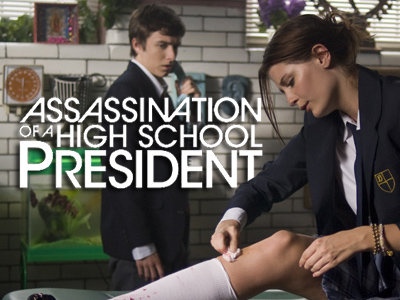
It's always a disappointment - for director, stars and potential audience - when a movie comes to any one of the festivals and fails to deliver, because it makes the film all the likelier to succumb to a fate at the hands of a tainted reputation ("Blindness" is a movie that debuted at Cannes in 2008 that never recovered from poor reviews), or to eternal obscurity as the filmmakers retreat to add and chop details which threaten its original integrity ("2046" is a case where drastic alterations post-Cannes aided its later reception). So it's even more tragic when a film, like "Assassination of a High School President" an arrival at Sundance in '08, comes to attract loads of high praise but then falls under stresses outside of its powers that can impede or altogether prevent its distribution. The Brett Simon-helmed comedy/noir which is equal parts murder mystery, a la Rian Johnson's "Brick" from 2005, and John Hughes-style high school comedy was furnished to Sundance last year by the Yari Film Group. It quickly attracted buzz for its irreverent and smart plot and "colorful, sexy characters," but because of recent events of Yari being forced into bankruptcy, the film is now threatened with being passed over for theatrical distribution and sent direct to DVD release, thereby relegating it to some dark, dusty corner of the local video rental store to be seen only by adventurous passers-by.

Even though the company is still able to operate and produce pictures, it was their releasing unit that filed Chapter 11, so this remains among several other pictures waiting to see an actual audience actually see it (say that five times fast). If "Brick," a hardboiled neo-noir with spit-fire dialogue and a relatively unknown cast, can make it and find its fanbase, then I see no reason why this film can't. "Brick" boasted Joseph Gordon-Levitt as its headliner who has emerged as an immensely talented young actor, but he's not quite as popular as, say, Mischa Barton ("The OC"), so I'm sure with the proper marketing of the involved talent and material, not to mention the great reviews it's already been getting throughout the blogosphere, I think this could become a rather successful niche film. I must also mention that Bruce Willis is in it as well, so there's an entirely other reason to commit the dollars. Being a tremendous fan of "Brick" myself, and a lover of noir in all its incantations, I relish any opportunity to see what kinds of twists can be applied to the genre, which suffers from general assumptions about its look, pacing and tone. (Jules Dassin's "Night and the City" was one of the films I watched in my earliest film classes which made me stop wanting to produce movies, and just write about their enchanting effect.)
Sony possesses the home video distribution rights and feels it best to just send it direct to DVD, but other studios are still waiting around and testing the waters to see if anything bites. In this economy, you can't really blame them. The film has an official Facebook page, so if it becomes known that there is a comparable audience for the film, it could be enough for a company (or Sony itself) to take the step up and write up the checks for the theatrical rights, press and adverts, and for distribution. As "Slumdog Millionaire" has shown, it's not always a longshot for an independent film to maneuver around its financial stakes to become a popular success.

Will you be making a 'hit' on this "High School President"?

Hats off to Slashfilm for scooping this (via Twitter, no less) and getting the ball rolling on this campaign. Cinematical has also thus far pitched in, as has Ain't It Cool News. (Slashfilm also has nice links to various reviews with snippets.)


IMAGE from: Slashfilm
IMAGE from: Cinematical

Gwyneth Paltrow Picks Five... Who Pick Five

As a relative amateur in the business of film criticism (which I haven't actually committed to this site but intend to as soon as I catch up this week that I have off from classes at USC) not to mention the world of blogging, I always find it interesting to see what others are doing, what the stretch is between my itsy bitsy steps and their leaps and bounds, and what they think of the universe they're in - whatever universe it is. My taste in entertainment and art is limited only to what I can experience first-hand, which expectedly isn't much since I'm not quite firmly placed within the industry and can't demand such things as screeners (lucky bastards at SXSW this week getting to have all the fun) or advance copies of music albums. So I look at what musical artists are listening to, what they think is great songwriting, great producing, great vocals. Who are the singers' singers, the darlings of the stars? This I do through iTunes, which is updated somewhat frequently. I mold my tastes around what I understand from these people to be the new and exciting, and try to develop an appreciation for their innovations (or simply their dexterity). Writers and authors often discuss their influences, and those can be found readily in journals, magazines and on the internet; Wikipedia usually has an influences section for popular and influential authors which sometimes uses direct quotes. I'm not as susceptible to these sorts of distinctions because I've grown comfortable with my style of writing and don't derive much from their praises or criticisms. And, honestly, I don't read as much as I used to.

I do, however, watch movies quite often, though it's rather inconsistent, fluctuating (predictably) between months in the year. And as for the movies and those rampant opinions, a few magazines will publish lists, typically in year-end issues or when festivals or awards ceremonies come around on the global or national film community calendars, but they're not steady features or usual fare for print publications, being only a little more frequent online. (The highbrow but totally worthy Sight & Sound magazine produces a poll of Top Films and Top Directors as voted by both filmmakers and critics, but then it's only every ten years and the films that appear are more or less consistent.) I couldn't say most people are interested in these things as I am, sadly, because most of the mainstream audiences don't pay such close attention to who these people are and so couldn't care less about what they think are the best and who're the brightest. Such musings are really only attractive to those who love the industry to begin with and who take pleasure in possessing that little bit of insider knowledge (which isn't really insider knowledge, though such things do inform styles of directing).

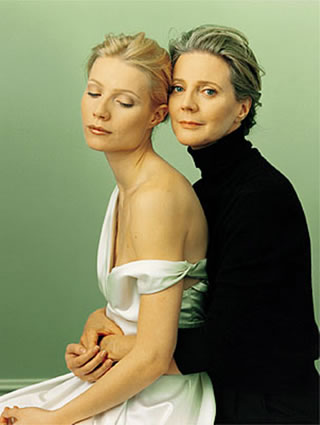
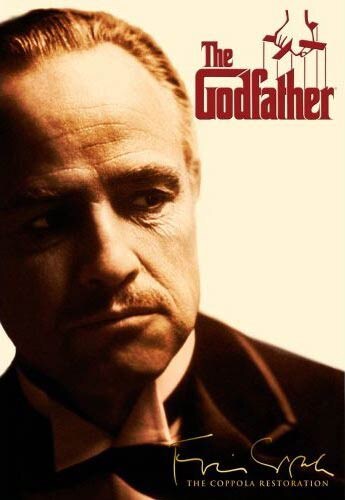
It's also nice to know that people in the industry are perceptive and aware of the ebbs and flows of the industry that employs them, as Gwyneth Paltrow illustrates via her new startup, GOOP. (Must say, I like the place she's set up in her corner of the vast web, her writing is pleasingly minimalistic and informative.) Being a top-billed actress at the height of her powers (that's debateable, but I think she's become so much more meticulous about her career and how she's projected than she was just years ago), one wouldn't think she'd have the time or desire to form and position her opinion on the history of film and its highlights, but not only does she do that, she's also managed to get five directors (only one of whom she's not worked with... yet) to spill their thoughts on what they think are endlessly watchable films. Some more famous than others, they all at least are still in operation and still creating exciting art. Steven Spielberg, Wes Anderson, James Gray, Sofia Coppola, and Jon Favreau. Some surprising picks by each of them, too. "Tootsie" was chosen twice, as was "The Godfather." The latter appears in the Sight & Sound poll as well.

Read her preface, her own favorites, the list and the reasons behind some of the picks at her place. And don't forget to discuss them in the comments.

What did you think of their picks?


IMAGE from: Chic in Paris
IMAGE from: Overstock.com
SCOOPED first by: Slashflm

3/12/09

Lex Luthor Needs a Bailout

Being the comics/superhero nerd (no, comics and superheroes aren't always interchangeable!) that I am, this really tickled me. Jon Hamm (of AMC's phenomenal "Mad Men") would make a compelling and very inspired Lex Luthor, although I have no qualms with Kevin Spacey playing the role. Dashing good looks, deceptively intelligent, certainly articulate - it's the perfect combination for evil. Why has no previous iteration of Luthor played on the looks? He's always bald, yes, but mostly black only sometimes white, and always forgettably bland-looking with no exeggerated physicality like his nemesis. Shouldn't the evildoer be appealing, and attractiveness is always persuasive, or else how can he be so conniving, so convincing time and again? Luthor is a contemporary manifestation of Satan. (Luthor. Lucifer. Hm.) The great deceiver, the great manipulator. Money and wealth are no longer enough of a draw, except in today's market it is, so why not play to other possible traits?


Used the current economic crisis as a backdrop, but was kind of expecting more references. Maybe: "Evil AIG Execs Wreaking Havoc on Wall St. and Main St., Chaos Ensues"? "Rupert Murdoch Slashes Jobs, Kills off Daily Planet"? "Mortgage Crisis Puts Local Resident Clark Kent on the Streets"? "Octo-Mom's Babies are Mutants! More On the Way"? None of these could've been at the hands of Luthor?


And, no, there's still nothing on a new installment in the franchise.

It wasn't intended that while updates on "Iron Man 2" have come out, I posted the Funny or Die video instead, even though the video means absolutely nothing for the next film. Call me a DC fanatic, I suppose. (Truth be told, I'm supremely excited about Mickey Rourke's official involvement in the sequel, playing an evil Russian which is a composite character, and hope some exciting things come out of the development cycle for us to read about and pore over. I'm disappointed about Scarlett Johansson, though, if only because Emily Blunt would've made a killer Black Widow. When you're hot, you're hot, and Blunt still has some people to please before she becomes the star that she deserves to be.)

Should Warner Bros. pursue another round of Superman Saves the Day?


VIDEO from: Funny or Die
SCOOPED first by: Hollywood Elsewhere